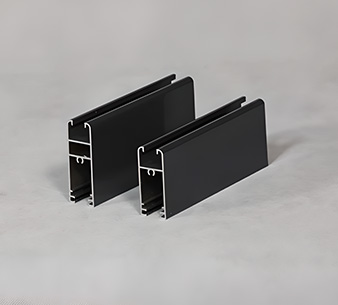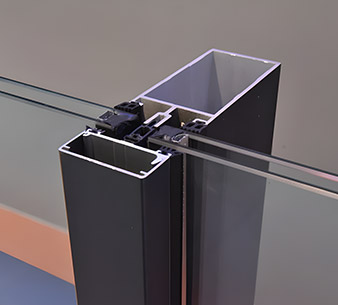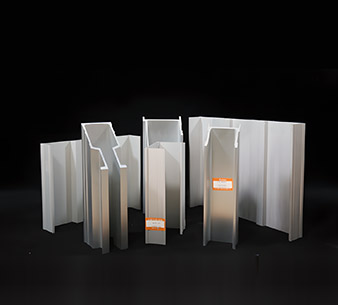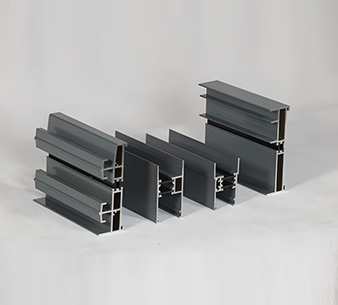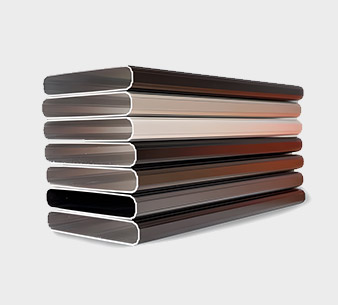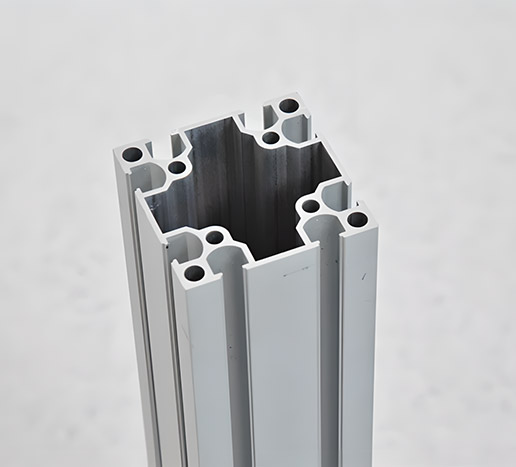
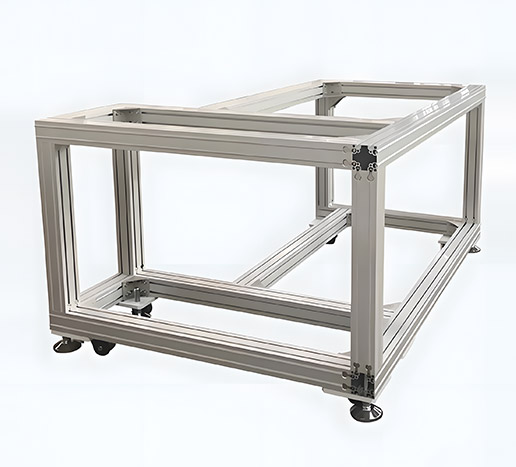
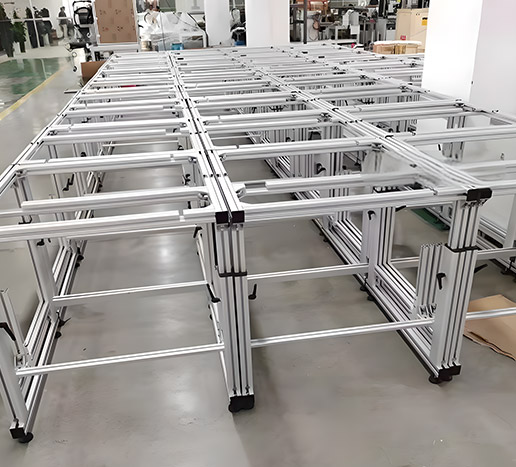
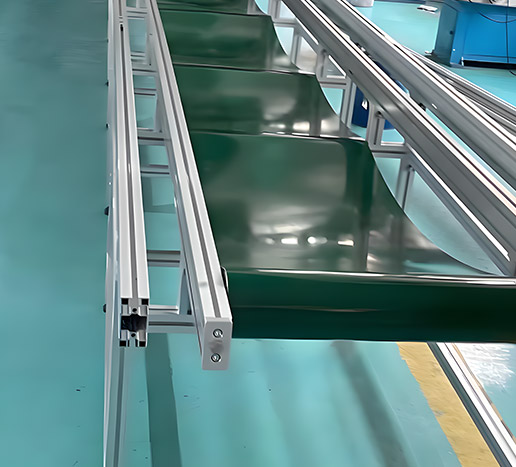
The aluminium profiles on the assembly line can be customized into various structural frames based on the customer's specified dimensions and models. Auxiliary materials are employed to connect these frames, enabling the creation of structures with diverse appearances.
The assembly line aluminium profile serves as a mobile console system designed to reduce labor dependency by utilizing fixed equipment positions to carry out standardized operations. These aluminium profiles can be customized into various structural frameworks based on the customer's specific dimensions and model requirements, with auxiliary components used to connect and enhance the structural appearance.
For instance, equipment dust covers are protective enclosures for automated machinery, typically custom-fabricated to fit the specific device. Traditionally, such covers were constructed from iron or steel, requiring welding during assembly. These materials, however, were heavy and cumbersome, making disassembly and maintenance inconvenient.
Currently, industrial aluminium profiles are widely used as an alternative. These profiles offer numerous advantages, including lightweight construction, ease of assembly and disassembly, dust-proof and rust-resistant properties, environmental friendliness, hygiene, and minimal maintenance requirements.
Dustproof Function: The protective cover effectively isolates the equipment from the external environment, preventing dust from entering and thereby significantly extending the equipment's service life.
Operator Safety: During the operation of the equipment, malfunctions or issues may occur. By using protective covers to separate the equipment from personnel, the risk of workplace accidents can be significantly reduced.
Noise Reduction: Equipment operation often generates considerable noise. By enclosing the equipment with aluminiumprofile protective covers, noise levels can be effectively reduced, creating a quieter and more stable working environment for employees.
Aesthetic and Organized Appearance: Industrial aluminiumprofiles are known for their elegant and modern appearance. The use of dust covers not only enhances the visual appeal of the workshop but also contributes to a more organized and professional atmosphere. In modern industrial production, aluminiumprofiles for assembly lines are increasingly adopted and are considered the preferred choice for material construction.
1. The density of aluminiumprofiles is lower than that of other commonly used metals, making them lightweight. Specifically, the density of aluminiumis only 2.70 g/cm³, approximately one-third that of copper or iron.
2. It can withstand both hot and cold processing treatments and exhibits strong corrosion resistance.
3. Aluminiumis abundant globally and has a high content in the Earth's crust.
4. It possesses good ductility and elongation properties and can be alloyed with various metallic elements to produce lightweight alloy materials.
5. It has excellent deformability and yielding capacity, making it advantageous for manufacturing processes.
6. It demonstrates good casting properties.
7. It offers favorable characteristics for surface treatment.
8. It has stable chemical properties, is non-magnetic, and can be recycled and reused, making it an environmentally friendly and reusable metallic material.
9. It has a low elastic modulus, does not spark during collision or friction, and demonstrates excellent performance in automotive applications.
10. It exhibits resistance to nuclear radiation.
11. It does not cause metallic pollution, is non-toxic, and its surface oxide layer does not emit volatile metals.